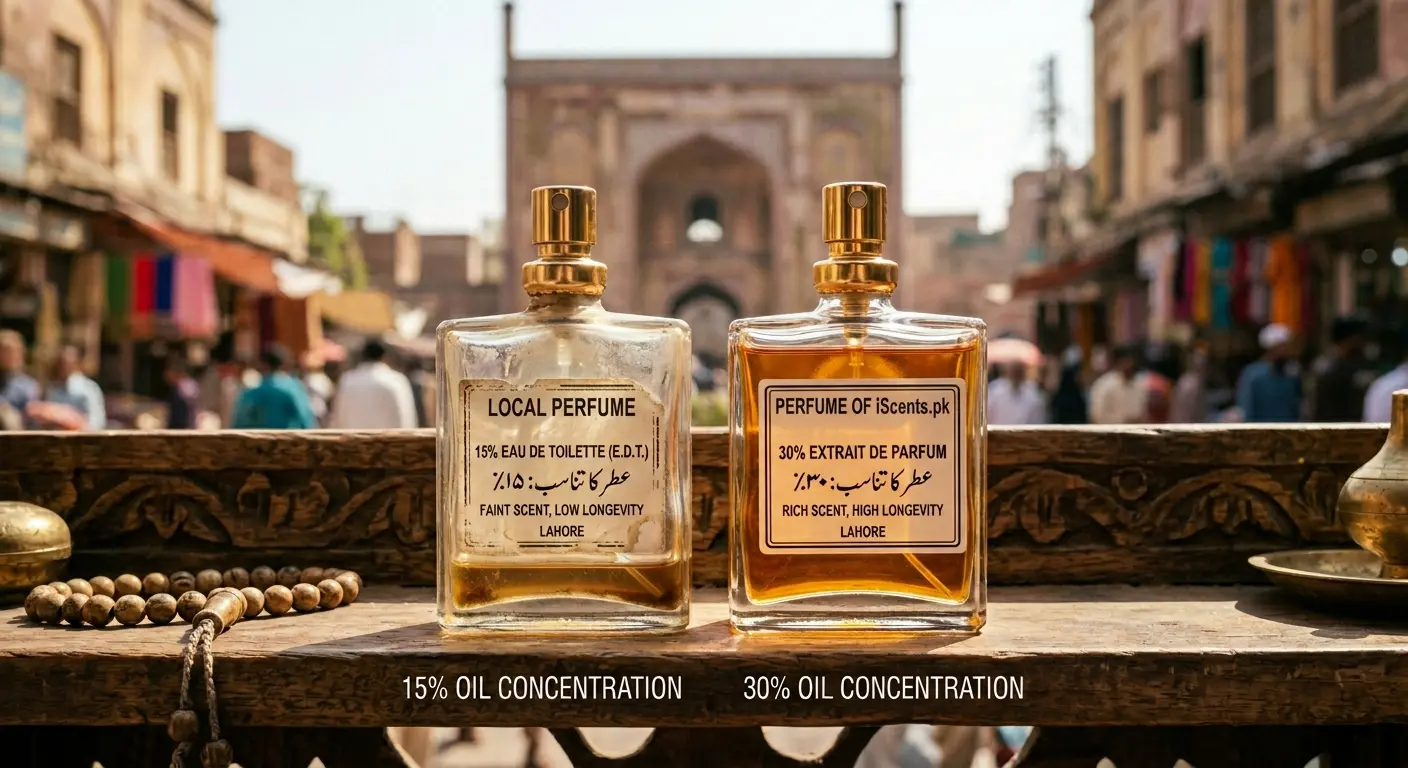

You know the routine. You spray your perfume at 8 AM. By 10 AM — gone. By noon — not even a trace. In Pakistan’s heat, this isn’t bad luck. It’s bad concentration.
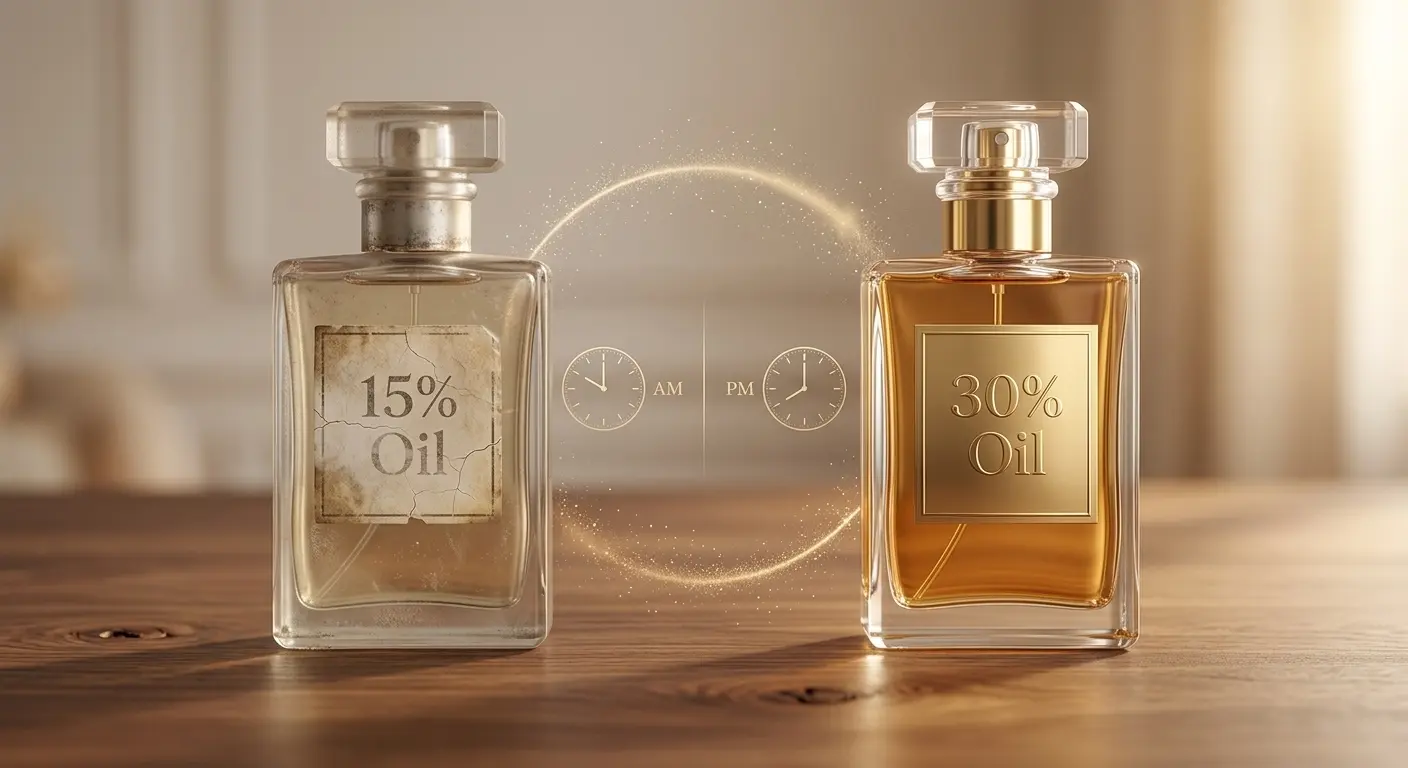
Most people blame the perfume. But the real culprit is the oil-to-alcohol ratio hiding inside the bottle. In this guide, I’ll explain why 30% parfum oil concentration is the difference between a scent that disappears by chai time and one that lasts through dinner.
In This Guide:
What Is Perfume Oil Concentration?
Every perfume is a mix of two things: fragrance oil and alcohol. The oil carries the scent. The alcohol helps it spray and evaporate. The ratio between them determines everything — how strong it smells, how far it projects, and most importantly, how long it lasts.
Here’s the quick breakdown:
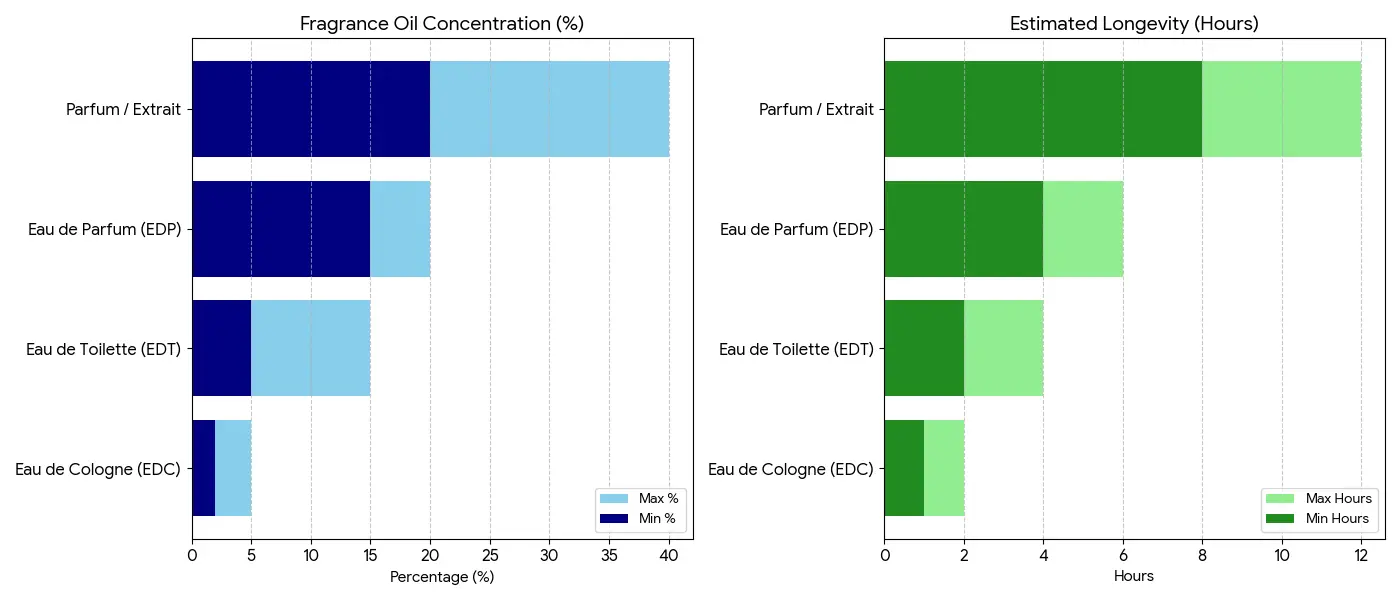
- Eau de Cologne (EDC): 2-5% oil. Lasts 1-2 hours. Basically scented water.
- Eau de Toilette (EDT): 5-15% oil. Lasts 2-4 hours. What most affordable perfumes use.
- Eau de Parfum (EDP): 15-20% oil. Lasts 4-6 hours. Mid-range designer standard.
- Parfum / Extrait: 20-40% oil. Lasts 8-12+ hours. The highest grade. This is what 30% falls under.
At 30% parfum oil, you’re getting double the concentration of a standard Eau de Parfum. That’s not a small upgrade — it’s a completely different experience.
Why Oil Ratio Matters in Pakistan’s Climate
Pakistan isn’t Paris. Our summers hit 40°C with humidity in Karachi and dry heat in Lahore. Alcohol evaporates faster in heat — that’s basic physics. The more alcohol your perfume has, the quicker it vanishes.
Here’s what happens when you spray a low-concentration perfume on a hot day:
- Alcohol hits warm skin and evaporates almost instantly
- The small amount of oil that’s left behind spreads thin across your skin
- Within 1-2 hours, there’s nothing left — the oil molecules have dissipated
Now with a 30% oil concentration:
- Less alcohol means slower evaporation from the start
- The higher oil content creates a thicker layer on your skin
- Oil molecules release fragrance slowly over 8-12 hours instead of all at once
- Sweat and humidity don’t break it down as fast
This isn’t marketing talk. It’s chemistry. More oil = slower evaporation = longer-lasting scent. The math is that simple.
15% vs 30% — The Real Difference
Let’s get specific. What actually changes when you switch from a standard 15% oil perfume to a 30% concentration?
| Factor | 15% Oil (EDP) | 30% Oil (Parfum) |
|---|---|---|
| Longevity in AC / indoors | 4-5 hours | 10-12 hours |
| Longevity in heat (35°C+) | 2-3 hours | 6-8 hours |
| Projection (first hour) | Moderate | Strong |
| Sillage (scent trail) | Fades quickly | Noticeable for hours |
| Bottle lifespan (50ml) | 2-3 months (more sprays needed) | 4-6 months (fewer sprays needed) |
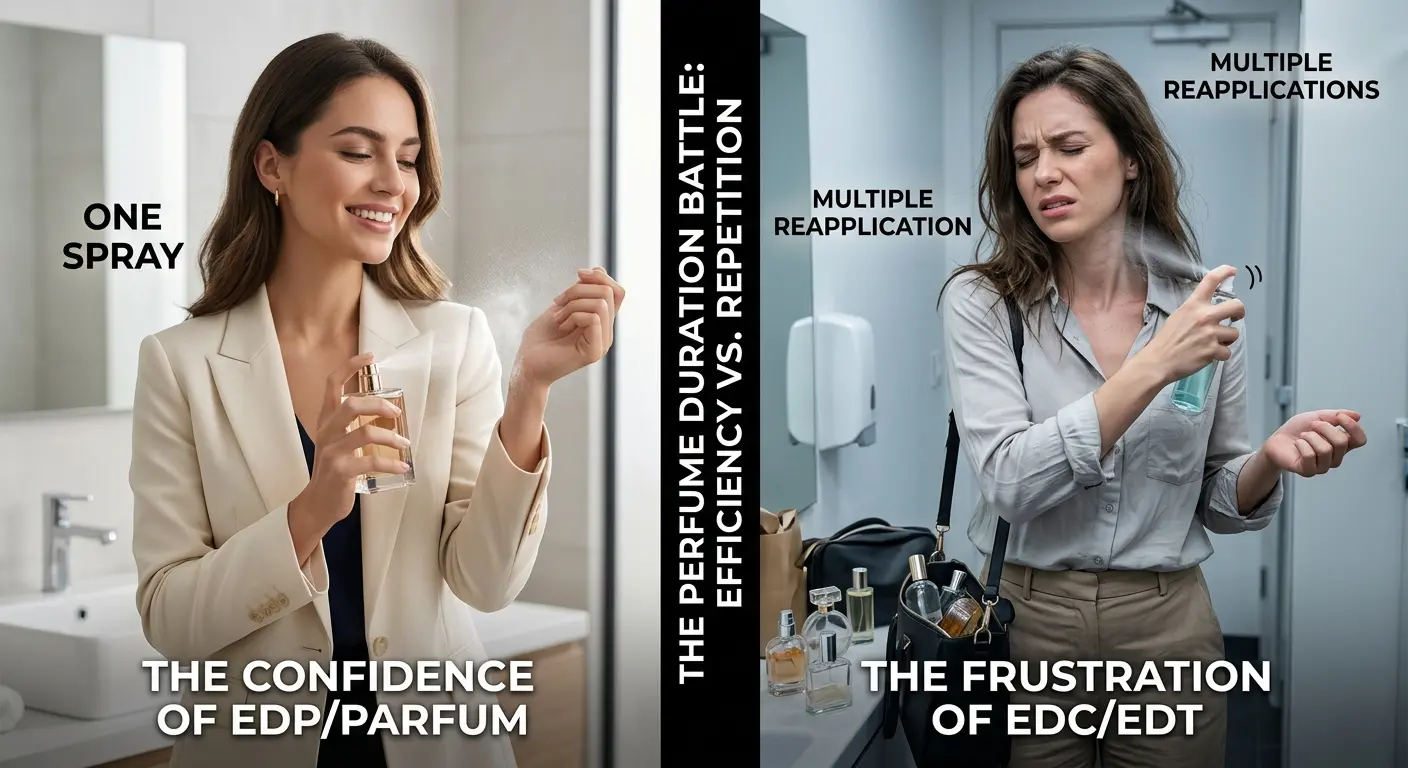
| Reapplications per day | 2-3 times | Once. Maybe twice for events. |
A 30% oil perfume costs more to produce — that’s why most brands don’t do it. But it saves you money in the long run because you use fewer sprays and reapply less often.
Why Most Brands Don’t Use 30% Oil
If 30% oil is so much better, why doesn’t everyone use it?
1. It costs more. Fragrance oils are expensive. Alcohol is cheap. When a brand uses 10-15% oil, they’re stretching their product with cheap filler. Higher oil ratios eat into profit margins.
2. It requires better formulation. You can’t just dump more oil into alcohol and call it a day. High-concentration perfumes need precise blending so the scent doesn’t become heavy, oily, or overpowering. This takes skill and testing.
3. Most consumers don’t check. The average buyer looks at the bottle, smells the top note, and decides. They don’t flip the box to read the concentration. Brands exploit this. They sell you 10-15% oil at premium prices because nobody holds them accountable.
4. Designer brands profit from planned obsolescence. If a perfume fades in 3 hours, you reapply more. You finish the bottle faster. You buy again. Longevity actually works against their business model.
At iScents.pk, we don’t have retailers taking a cut. We don’t pay celebrities. We don’t import fancy boxes from France. Every rupee goes into the juice — the oil inside the bottle.
How to Check Your Perfume’s Oil Concentration
Next time you pick up a perfume — any perfume — check these three things:
- Look at the label. It should say Eau de Toilette, Eau de Parfum, Parfum, or Extrait somewhere on the bottle or box.
- Check the ingredient list. If “Alcohol Denat” or “SD Alcohol” is the first ingredient, it’s likely a low-concentration formula.
- Ask the seller. Ask directly: “What is the oil percentage in this perfume?” If they can’t answer, that tells you something.
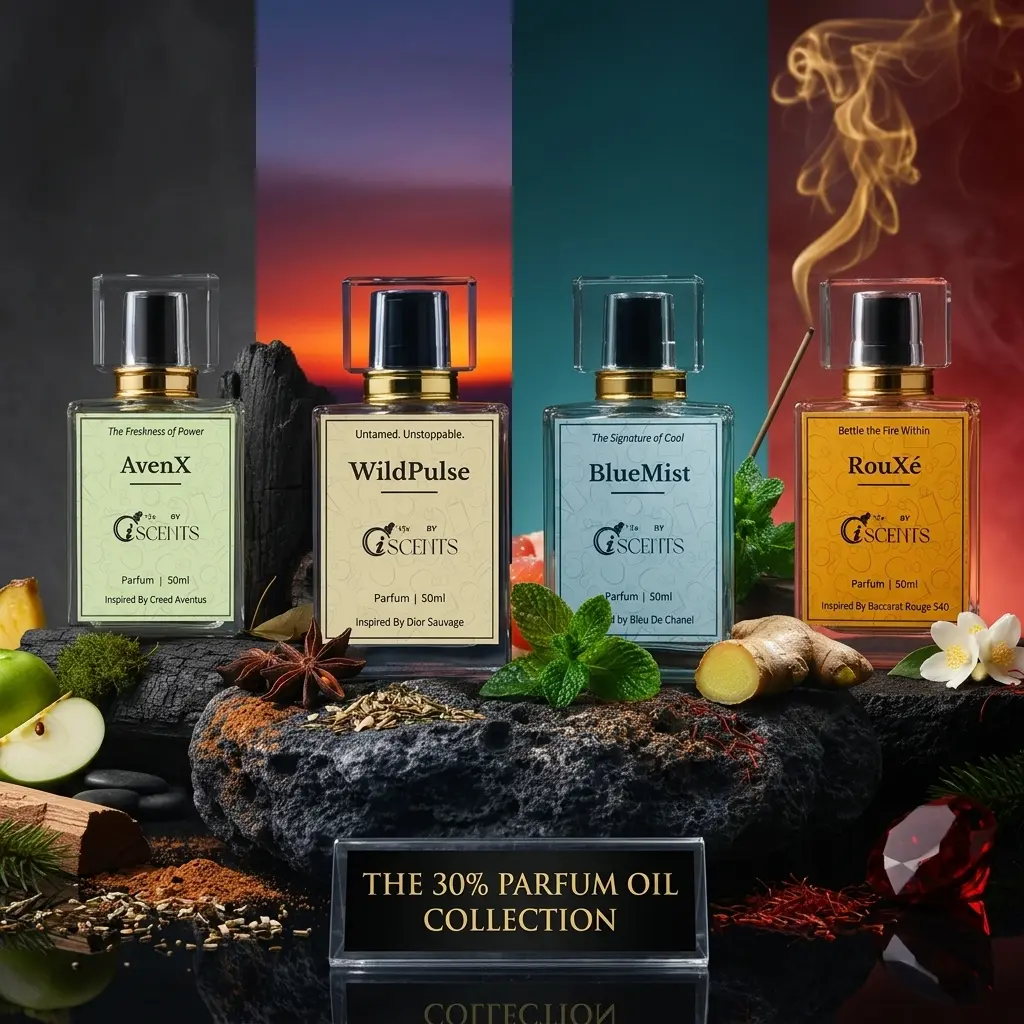
Most brands won’t volunteer this information. That’s why we print 30% Parfum Oil right on our packaging. We want you to know exactly what you’re buying.
How iScents.pk Approaches Concentration
When I started iScents.pk, I made one rule: 30% parfum oil. No exceptions.
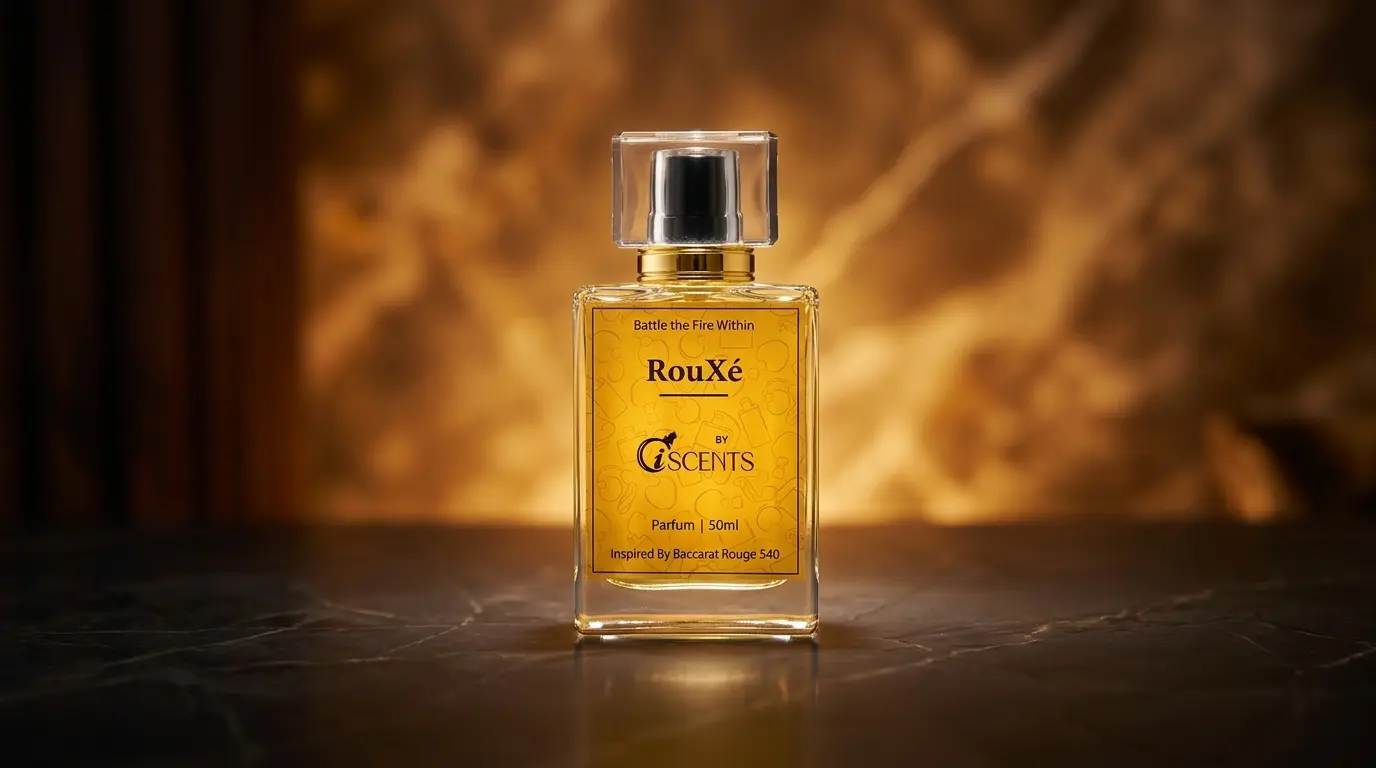
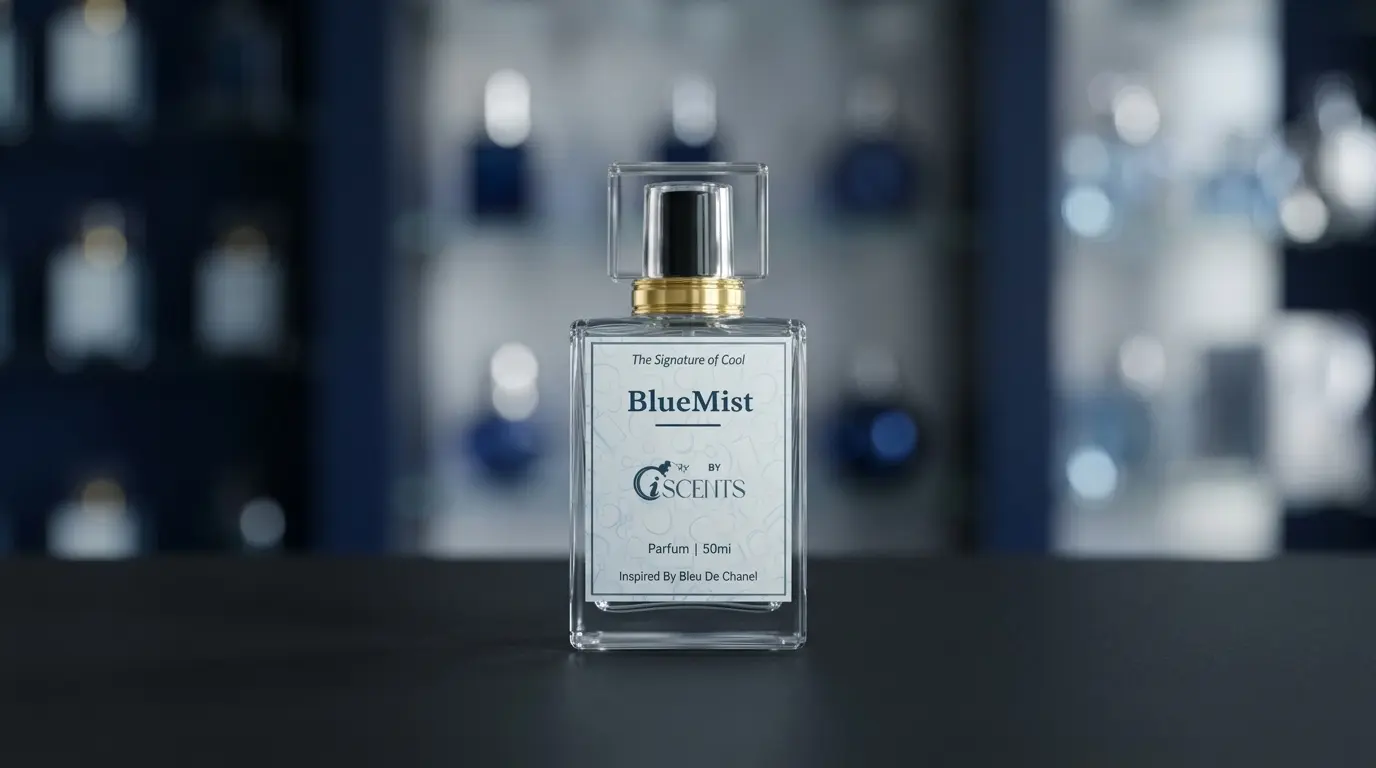
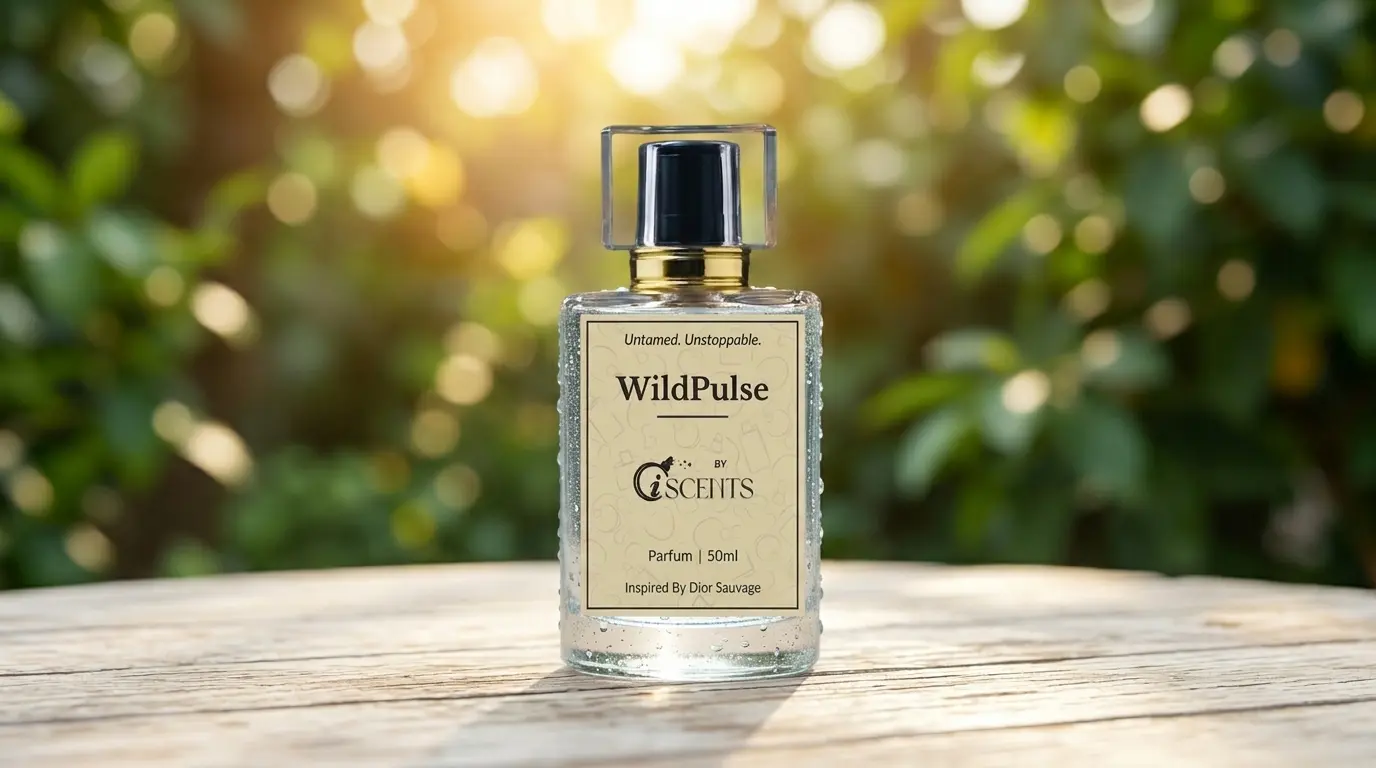
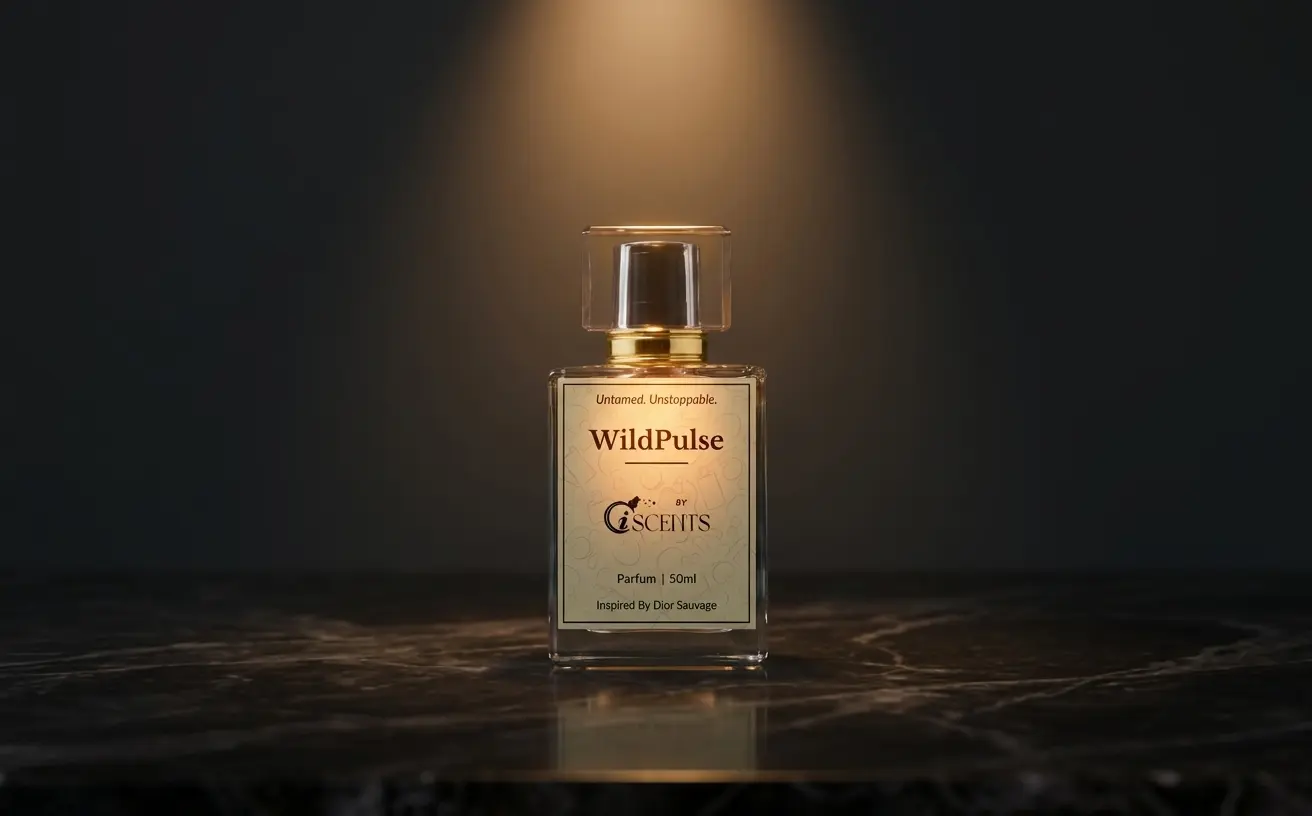
Every single bottle — whether it’s AvenX, WildPulse, BlueMist, or RouXé — runs on the same 30% concentration. No weak versions. No “special editions” with lower oil. No compromises.
Is it more expensive to produce? Yes. Does it mean fewer repeat purchases because a bottle actually lasts? Also yes. But I’d rather sell you one bottle that works than three bottles that disappoint you.
Frequently Asked Questions
Is 30% oil concentration safe for skin?
Yes. Higher oil concentration doesn’t mean harsh chemicals — it means more fragrance oil and less alcohol. Alcohol is what dries out your skin, not the oil. A 30% parfum oil perfume is actually gentler on skin than a low-concentration EDT because there’s less alcohol in every spray. If you have sensitive skin, always do a small patch test first.
Does higher oil concentration mean the perfume smells stronger?
Not necessarily louder — but it smells richer and lasts longer. Higher oil concentrations create a more rounded, deeper scent profile because the base notes have more time and material to develop on your skin. The projection is strong for the first hour, then settles into a close, noticeable trail that lasts for hours rather than minutes.
How many sprays of a 30% oil perfume do I need?
Two to three sprays maximum. One on the chest, one behind the neck. For evenings or outdoor events, a third spray on clothing works well. With 30% oil, more is not better — you’ll overwhelm yourself and others. The whole point is that you don’t need to over-apply.
Can I use 30% oil perfume in summer?
Absolutely. In fact, it’s designed for summer. Low-concentration perfumes evaporate within an hour in Pakistani heat. A 30% oil concentration was specifically formulated to withstand high temperatures and humidity. The higher oil content resists evaporation, which is exactly what you need in June and July.
Why doesn’t every perfume brand advertise their oil percentage?
Because most don’t want you to know how low it is. Designer brands spend millions on marketing, packaging, and celebrity endorsements — then fill the bottle with 10-15% oil and 85-90% alcohol. If they printed “10% oil” on the box, you’d question why you’re paying Rs 15,000 for mostly alcohol. Transparency isn’t in their interest.
How can I tell if a perfume has enough oil concentration?
The most practical test: spray it on your wrist in the morning. If you can still smell it on your skin after lunch without reapplying, it has decent oil content. If it’s gone by 10 AM, you’re dealing with a low-concentration formula. Also check the price — perfumes with truly high oil ratios rarely sell for under Rs 5,000 because the oils themselves are expensive to source.
Final Thought
You deserve to know what’s in the bottle. Not just the scent — the actual chemistry that determines whether it lasts through a workday or disappears before your first meeting. Concentration isn’t a luxury feature. It’s the whole point.